Many patients feel relieved once their root canal treatment is completed. The pain reduces, the infection is removed, and the tooth feels normal again. At this stage, patients often ask an important question. If the infection has already been treated, why does the dentist recommend placing a crown afterward?
The answer is related to the long term strength of the tooth. After a root canal procedure, the tooth becomes more fragile than before. A dental crown helps protect the tooth from cracking or breaking during daily chewing.
At Krisshnaa Dental & Multispeciality Care in Central Delhi, dentists usually recommend crowns after painless root canal treatment to ensure the treated tooth remains strong and functional for many years.
This article explains why crowns are important after root canal therapy and how they help preserve your natural tooth.
Table of Contents
- What Happens During Root Canal Treatment
- Why a Tooth Becomes Weaker After Root Canal
- How a Dental Crown Protects the Treated Tooth
- When a Crown Is Usually Necessary
- What Happens If You Skip a Crown
- Long Term Benefits of Crown Placement
- Root Canal Care at Krisshnaa Dental in Central Delhi
- FAQs About Crown After Root Canal Treatment
What Happens During Root Canal Treatment
Root canal therapy is a procedure used to remove infection from inside the tooth.
During the treatment:
• The infected pulp tissue is removed
• The root canals are cleaned and disinfected
• The canals are sealed with a special filling material
• The tooth is restored to eliminate infection and pain
Modern techniques make painless root canal treatment very comfortable for patients. Many clinics now offer advanced root canal treatment near me searches using digital imaging and precision instruments to improve treatment success.
Although the infection is removed, the internal structure of the tooth changes after treatment.
Why a Tooth Becomes Weaker After Root Canal
A natural tooth receives nutrients and moisture from the pulp tissue inside it. When the pulp is removed during root canal therapy, the tooth loses some of its internal support.
Several factors contribute to weakness after treatment:
• Removal of infected tissue reduces internal moisture
• Tooth structure is removed to access the root canal
• Large cavities weaken the tooth walls
• Daily chewing forces place stress on the remaining tooth
This is why dentists often recommend a protective restoration after root canal treatment in Central Delhi.
Back teeth such as molars and premolars are especially vulnerable because they handle the strongest chewing forces.
How a Dental Crown Protects the Treated Tooth
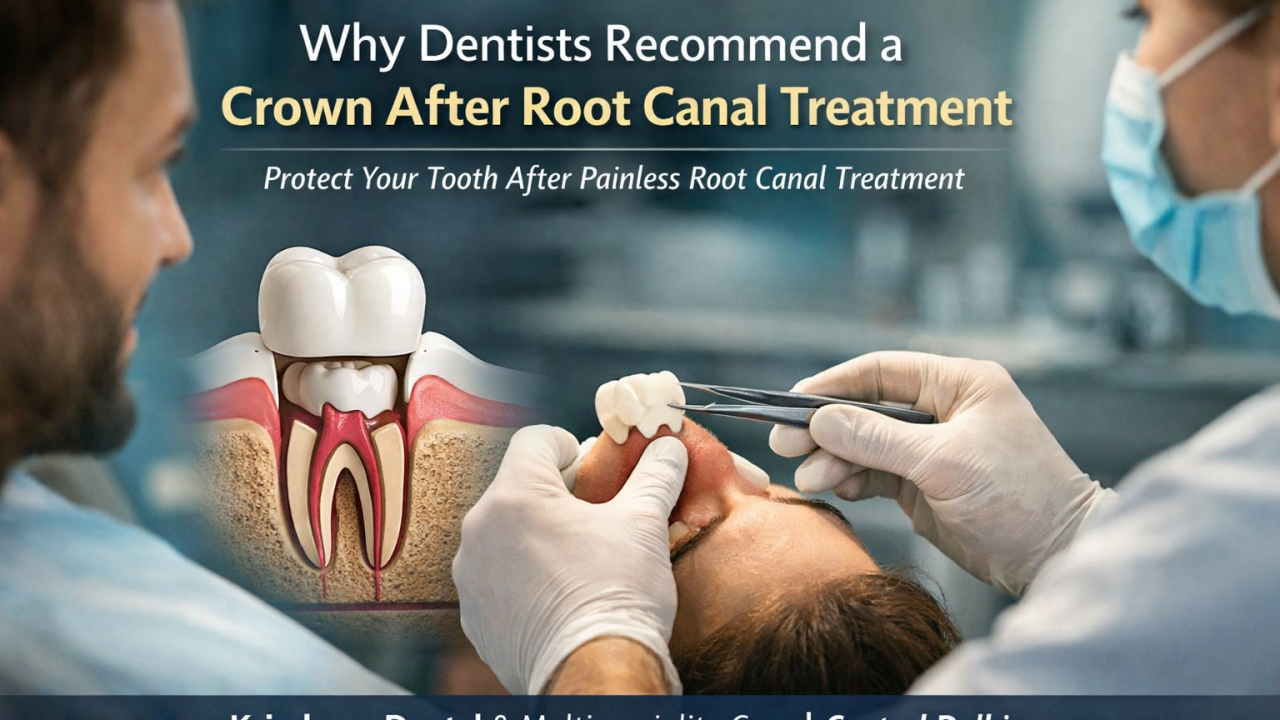
A dental crown acts like a protective cap placed over the tooth.
The crown covers the entire visible portion of the tooth and provides several benefits:
• Restores the original strength of the tooth
• Distributes chewing forces evenly
• Prevents cracks or fractures
• Protects the tooth from bacterial leakage
• Restores normal function and appearance
Patients searching for the best root canal in Karol Bagh are often advised to place a crown after treatment to ensure long term stability.
With proper crown placement, the treated tooth can function just like a natural tooth.
When a Crown Is Usually Necessary
Not every tooth requires the same type of restoration after root canal therapy. However, crowns are strongly recommended in certain situations.
A crown is usually needed when:
• The tooth is a molar or premolar
• A large cavity has damaged the tooth
• The tooth already has cracks or fractures
• A large filling was present before treatment
• The patient has heavy chewing forces or teeth grinding
Dentists performing advanced root canal treatment near me searches often advise crowns for back teeth because they experience the highest pressure during chewing.
Front teeth may sometimes be restored with fillings if enough tooth structure remains.
What Happens If You Skip a Crown
Some patients delay or avoid crown placement after root canal therapy. This can lead to problems over time.
Possible risks include:
• Tooth fracture during chewing
• Development of cracks in the tooth
• Leakage of bacteria into the root canal
• Failure of the root canal treatment
• Tooth extraction if the fracture becomes severe
Patients who visit a dentist near me for pain months after root canal treatment often discover that the tooth cracked because it was not protected with a crown.
Placing a crown soon after treatment helps prevent these complications.
Long Term Benefits of Crown Placement
Dental crowns significantly improve the long term success of root canal treatment.
Benefits include:
• Higher survival rate of treated teeth
• Better resistance to fracture
• Improved chewing function
• Reduced risk of reinfection
• Restoration of natural tooth shape and appearance
With proper care, a crown placed after root canal treatment in Central Delhi can last 10 to 15 years or even longer.
Regular dental checkups help maintain the crown and surrounding tooth structure.
Root Canal Care at Krisshnaa Dental in Central Delhi
At Krisshnaa Dental & Multispeciality Care, dentists focus on preserving natural teeth with precise and comfortable treatment.
The clinic offers:
• Painless root canal treatment using modern techniques
• Digital diagnosis and careful treatment planning
• High quality crowns for long term protection
• Personalized dental care for every patient
Patients searching for the best root canal in Karol Bagh or advanced root canal treatment near me often choose Krisshnaa Dental for experienced care and long lasting results.
Protecting the tooth after root canal therapy is an essential step in maintaining oral health.
Frequently Asked Questions
Is a crown always necessary after root canal treatment?
Crowns are usually recommended for molars and premolars because they handle strong chewing forces. Front teeth with minimal damage may sometimes be restored with fillings instead.
Can I delay getting a crown after painless root canal treatment?
It is not advisable to delay crown placement for a long time. The treated tooth is more vulnerable to cracks and fractures without protection.
Does placing a crown after root canal treatment hurt?
No. Crown placement is generally comfortable. Local anesthesia is used if needed, and the procedure is usually painless.
How long does a crown last after root canal treatment?
A dental crown can last 10 to 15 years or longer with proper oral hygiene and regular dental visits.
What happens if a root canal treated tooth breaks?
If a tooth fractures severely, it may become difficult to restore and sometimes requires extraction. Placing a crown helps prevent this situation.
Is painless root canal treatment really possible?
Yes. Modern techniques, advanced instruments, and local anesthesia allow dentists to perform root canal procedures with minimal discomfort.
Where can I get the best root canal in Karol Bagh?
If you are searching for a dentist near me for root canal treatment in Central Delhi, Krisshnaa Dental & Multispeciality Care provides professional diagnosis and comfortable treatment options.