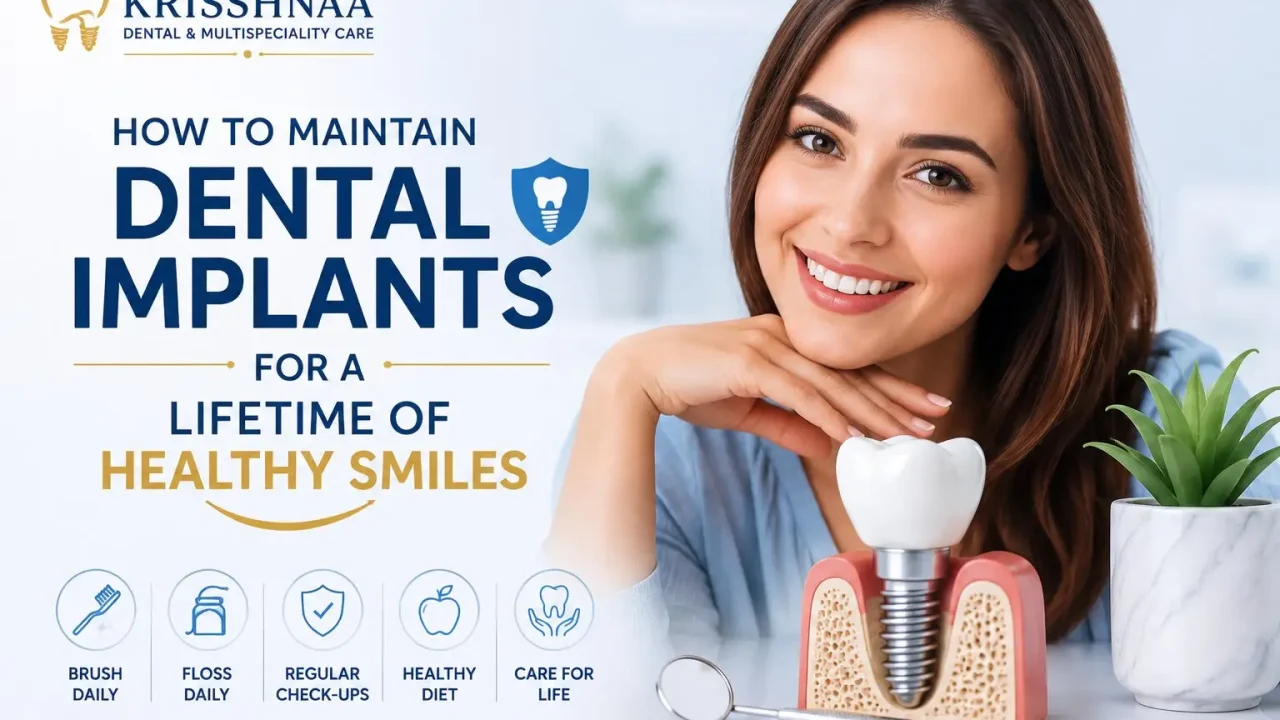
Dental implants are designed to provide a stable, natural-looking solution for missing teeth. Unlike removable dentures, implants are fixed into the jawbone and can restore both chewing function and smile aesthetics. However, getting a dental implant is only the beginning. Proper daily care, professional dental checkups, and healthy lifestyle habits are essential for keeping your implants and surrounding gums healthy for many years.
Whether you have recently received a Dental Implant in Central Delhi or are considering implant treatment, understanding proper maintenance can help protect your investment. At Krisshnaa Dental Clinic, patients receive personalized guidance on implant care, oral hygiene, and long-term dental health.
Understanding Dental Implant Maintenance
A dental implant consists of an implant fixture, an abutment, and a dental crown or other restoration. While the artificial implant itself cannot develop a cavity, the gums and natural teeth surrounding it can still be affected by plaque and bacteria.
Poor oral hygiene can contribute to inflammation around the implant, commonly known as peri-implant disease. Regular cleaning and professional monitoring are therefore important for maintaining healthy tissues around the implant.
1. Brush Your Teeth Twice a Day
Brushing twice a day is one of the most important habits for protecting your dental implants. Use a soft-bristled toothbrush and fluoride toothpaste to gently clean the implant crown, natural teeth, gumline, and surrounding areas.
Avoid brushing too aggressively because excessive pressure can irritate the gums. Instead, use gentle circular motions and spend enough time cleaning every surface.
An electric toothbrush may also be recommended by your dentist depending on your individual oral hygiene needs.
2. Floss Carefully Around Your Implants
Food particles and plaque can accumulate around dental implants, particularly near the gumline. Regular flossing helps keep these areas clean.
Specialized implant floss, interdental brushes, or water flossers may be recommended depending on the design of your restoration and the condition of your gums.
Ask your dentist to demonstrate the correct technique so you can clean around the implant without damaging the surrounding tissues.
3. Use Interdental Cleaning Tools
Traditional brushing cannot reach every space around an implant-supported restoration. Interdental brushes can help clean between teeth and around implant components.
Water flossers may also be useful for removing food debris and maintaining cleanliness around difficult-to-reach areas. Your dentist can recommend the most suitable cleaning method based on your implant and gum condition.
4. Schedule Regular Dental Checkups
Even with excellent home care, professional examinations remain essential. Regular appointments allow your dentist to monitor the condition of the implant, gums, bite, and surrounding teeth.
During a professional visit, your dentist may check for signs of inflammation, plaque accumulation, bone changes, or problems with the restoration.
Patients with dental implants may need customized recall schedules depending on their oral health and implant history.
5. Get Professional Dental Cleanings
Professional dental cleaning removes hardened deposits that cannot always be eliminated through regular brushing and flossing.
Your dentist or dental hygienist can use appropriate instruments and techniques to clean around your implant without unnecessarily damaging its components.
Regular professional maintenance is particularly important if you have a history of gum disease.
6. Protect Your Implants From Excessive Pressure
Dental implants are strong, but they are not indestructible. Avoid using your teeth to open packages, crack nuts, or bite extremely hard objects.
Patients who grind or clench their teeth may also place excessive pressure on their implants and natural teeth. If you experience nighttime teeth grinding, discuss it with your dentist. A customized night guard may be recommended when appropriate.
7. Maintain Healthy Gums
Healthy gums provide important support and protection around dental implants. Watch for symptoms such as redness, swelling, bleeding, tenderness, or persistent bad breath.
These symptoms should not be ignored, particularly if they develop around an implant. Early evaluation can help identify potential problems before they become more complicated.
8. Avoid Tobacco Products
Smoking and tobacco use can negatively affect gum health and healing while increasing the risk of complications around dental implants.
Avoiding tobacco is an important part of maintaining healthy gums and supporting the long-term success of implant treatment.
If you use tobacco, speak with your dental professional about strategies that may help you quit.
9. Follow Your Dentist’s Post-Treatment Instructions
Every implant case is different. Your dentist may provide specific instructions regarding cleaning, diet, medications, follow-up appointments, and restoration care.
Following these recommendations carefully is particularly important during the healing period after implant placement.
Once the implant has fully integrated and the final restoration has been placed, continue following your dentist’s long-term maintenance plan.
10. Maintain a Balanced Diet
A balanced diet supports healthy gums, bones, and natural teeth. Include nutrient-rich foods such as vegetables, fruits, dairy products, lean proteins, and other sources of essential nutrients.
If you have recently undergone implant surgery, follow your dentist’s recommendations regarding foods and chewing during the recovery period.
After healing, maintaining a balanced diet helps support your overall oral and general health.
Why Professional Implant Care Matters
Long-term implant maintenance is not simply about cleaning the artificial tooth. The health of the surrounding gum and bone is equally important.
Routine examinations allow dentists to identify early changes and recommend appropriate care. Professional monitoring can also help ensure that the crown, bridge, or denture attached to the implant remains comfortable and functional.
Choosing a trusted Dental Clinic in New Delhi for regular follow-up care can make maintaining your implants easier and more predictable.
Why Choose Krisshnaa Dental Clinic?
Patients considering or maintaining implants should choose a clinic that provides comprehensive dental care rather than focusing only on the implant procedure itself.
Krisshnaa Dental Clinic combines modern dental technology, professional expertise, and personalized patient care. From implant consultation and placement to restoration and long-term maintenance, patients can receive comprehensive support throughout their dental journey.
If you are looking for a Dental Implant in Central Delhi, regular follow-up with an experienced dental team can help protect your investment and support long-term oral health.
Expert Guidance From the Best Dentist in Central Delhi
The success of implant treatment depends on several factors, including implant placement, bone and gum health, oral hygiene, lifestyle, and ongoing professional care.
Consulting the Best Dentist in Central Delhi can help you understand how to maintain your specific implant and identify any potential problems early.
Your dentist can create a personalized maintenance plan based on your oral health, implant type, and restoration.
Conclusion:
Dental implants can provide a durable and natural-looking solution for missing teeth, but their longevity depends greatly on proper care. Brushing twice daily, cleaning between teeth, maintaining healthy gums, avoiding tobacco, protecting implants from excessive forces, and attending regular dental appointments can help keep your smile healthy for years to come.
If you have a Dental Implant in Central Delhi or are planning implant treatment, professional maintenance should be an important part of your long-term oral care routine. With expert guidance from Krisshnaa Dental Clinic, a trusted Dental Clinic in New Delhi, and regular care from the Best Dentist in Central Delhi, you can take proactive steps toward maintaining comfortable, functional, and confident smiles for years to come.
FAQs – Dental Implant in Central Delhi
1. How long can dental implants last?
With proper oral hygiene, healthy gums, regular professional maintenance, and appropriate lifestyle habits, dental implants can provide long-term service. The restoration attached to an implant may require maintenance or replacement over time.
2. Can dental implants get cavities?
The implant itself cannot develop a cavity because it is made from artificial materials. However, the natural teeth surrounding the implant can develop decay, and the tissues around the implant can become inflamed if oral hygiene is inadequate.
3. How often should I visit the dentist after getting an implant?
Your dentist will recommend a personalized follow-up schedule. Regular examinations allow the dental team to monitor your gums, implant stability, bite, and restoration.
4. What should I do if my implant feels loose or uncomfortable?
Contact your dentist promptly. A loose sensation, persistent discomfort, swelling, or bleeding around an implant should be professionally evaluated rather than ignored.
5. Why choose Krisshnaa Dental Clinic for implant maintenance?
Krisshnaa Dental Clinic provides comprehensive implant care, professional monitoring, personalized oral hygiene guidance, and modern dental treatment solutions to help patients maintain their implants and overall oral health.