Most people visit a dentist only when the pain becomes unbearable. By that point, what could have been a quick, affordable filling often turns into a root canal or, worse, an extraction. If you have been searching for a trusted dental clinic in Pune because of some nagging sensitivity or a tiny spot on your tooth, this post is for you.
Cavities are one of the most common health problems in India, yet they are also among the most preventable. Catching them early is the single biggest thing you can do to protect your smile and your wallet.
Why Cavities Are More Common Than You Think
India has a significant oral health problem. Studies show that the large majority of adults have some form of tooth decay or gum disease at some point in their lives, and many of them do not even know it. Urban lifestyles — sugary chai through the day, frequent snacking on biscuits and namkeen, and rushed brushing before work — quietly accelerate decay.
At Krisshnaa Dental and Multispeciality care,a significant number of patients who come in for a first check-up discover a cavity that has been growing silently for months. They typed “dentist near me” because of mild sensitivity, and they were genuinely surprised to learn what was hiding in a back molar.
The good news is that a cavity caught early means a small filling, a short appointment, and very little discomfort. The same cavity left for six more months means a much bigger conversation.
Six Early Signs That Should Send You to the Dentist
1. Sensitivity to hot, cold, or sweet things
A sharp twinge when you sip cold water or eat something sweet is one of the first signals your tooth sends when enamel begins to break down. Some sensitivity is normal, but when it keeps happening with the same tooth or lasts more than a second or two, it is time to get it checked.
2. A white, brown, or black spot on the tooth surface
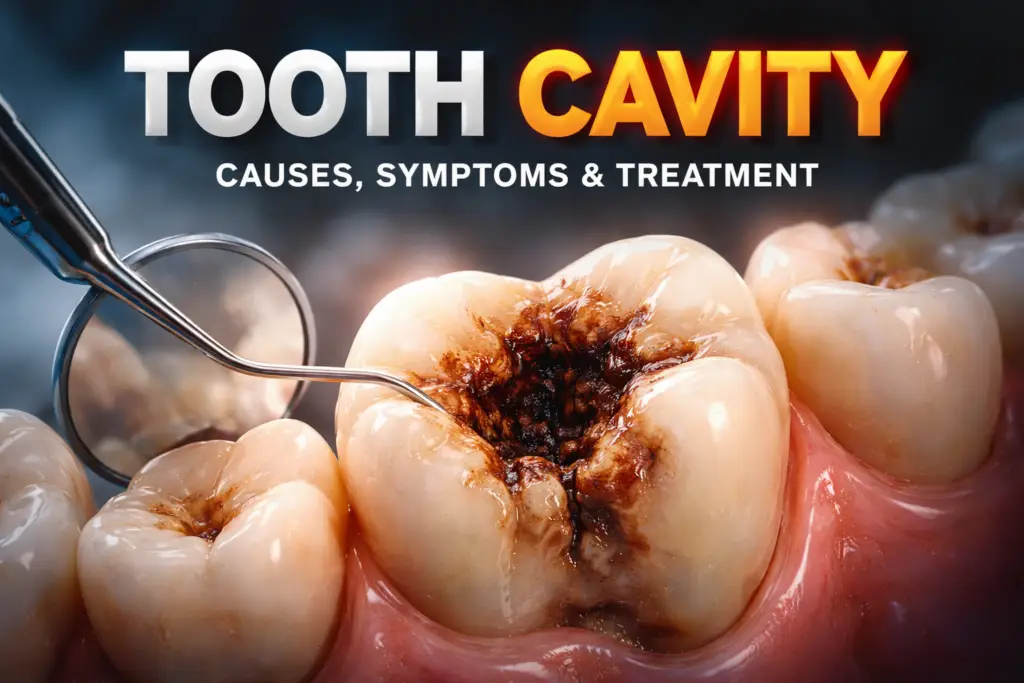
Many people assume that only a visible hole means a cavity. In reality, decay often shows up first as a chalky white patch, a brown stain, or a tiny dark dot. These spots are worth showing to a dentist even if they feel fine, because once they turn into a proper hole, the filling becomes larger and the procedure more involved.
3. Food getting stuck in the same spot repeatedly
If you find yourself reaching for floss or a toothpick after every meal because something always gets caught between the same two teeth, that is a red flag. Decay creates small gaps and rough surfaces that trap food, which then speeds up the decay further. A visit to a good dental clinic in Pune can confirm whether it is a cavity, an old filling breaking down, or something else entirely.
4. Bad breath that brushing does not fix
When a cavity deepens, it traps food particles in a place your toothbrush cannot reach. The bacteria that live in there produce gases that cause persistent bad breath. If you have kept up your brushing and flossing routine but still notice a bad taste or odour, decay could be the reason.
5. A rough patch or tiny chip
When decay weakens the inner structure of a tooth, the outer layer becomes fragile. Small chips or a rough edge that appears suddenly — often noticed by your tongue before your eyes — usually means the tooth needs attention. Do not wait for the rough patch to become a larger break.
6. Pain when you bite or chew on one side
Discomfort when biting into food on a specific tooth means the decay is deeper and possibly approaching the nerve, or that there is a crack forming. At this stage, a filling is still usually possible, but you do not want to wait longer. Our dentists at Krisshnaa Dental use digital X-rays to find exactly what is happening so nothing is left to guesswork.
What Causes Cavities in the First Place
Tooth decay happens when bacteria in the mouth feed on sugars and produce acid. That acid eats away at enamel — the hard outer layer of your tooth. Over time, a small weak spot forms, then a hole, then a deeper cavity.
Common triggers for patients who visit our dental clinic in Delhi include:
Sipping sugary tea or coffee throughout the day rather than in one sitting. Each sip is a fresh acid attack on your teeth.
Snacking frequently on refined carbohydrates like biscuits, white bread, and chips. These stick to teeth and give bacteria a long, sustained food source.
Brushing in a hurry and missing back teeth or the gumline.
Skipping flossing, which means the spaces between teeth never really get cleaned.
Dry mouth, which can be caused by certain medications, mouth breathing, or simply not drinking enough water. Saliva is one of your best natural defenses against decay.
How Dental Fillings Work at Krisshnaa Dental
When you come in for cavity treatment, the goal is always to remove as little natural tooth structure as possible. The procedure is straightforward and, with proper anaesthesia, comfortable.
First, we do a full clinical examination and take digital X-rays so we can see exactly where the decay is and how deep it goes. We then apply a local anaesthetic so you do not feel anything during the procedure. The decayed portion is gently removed, the area is cleaned and shaped, and tooth-coloured composite resin is layered in and hardened with a special curing light. Finally, the filling is shaped and polished so your bite feels completely natural.
Most patients are surprised by how quick it is. A single filling typically takes around 30 to 45 minutes. The tooth-coloured material we use blends in so well that nobody will be able to tell you have a filling at all.
Why You Should Not Wait
Once enamel is gone, it does not grow back. Decay only moves in one direction without treatment — deeper. A cavity that sits untreated will eventually reach the pulp of the tooth, where the nerve lives. At that point, you will likely need root canal treatment. If the infection spreads further, the tooth may need to come out.
People sometimes put off visiting a dental clinic because they are nervous, because they are busy, or because the tooth is not hurting yet. We understand all of those reasons. But a small filling now saves you from a much longer and more costly procedure later.
Daily Habits That Protect Your Teeth
Good oral hygiene between appointments makes a real difference. Some habits worth building:
Brush for two full minutes twice a day using a fluoride toothpaste. Most people brush for about 45 seconds — set a timer and see where you land.
Floss once a day, especially before bed. No rinse or mouthwash replaces flossing for cleaning between teeth.
Drink water after eating or drinking anything sugary or acidic. This helps rinse away food and neutralise acid.
Limit how often you snack rather than how much you eat in total. Fewer acid attacks per day means less damage to enamel.
Visit the dentist every six months for a check-up and professional cleaning. A lot of what we find and treat during these visits would never have been caught by the patient at home.
When to Book an Appointment Right Away
Do not wait for your next scheduled check-up if you notice any of the following:
A new spot, hole, or rough edge on any tooth.
Sensitivity that lasts more than a couple of seconds or keeps returning.
Pain when biting or chewing, even if it is mild.
An old filling that feels loose, high, or cracked.
Persistent bad breath despite brushing and flossing.
These are all signs that something needs attention sooner rather than later. The earlier we see it, the simpler and less expensive the solution.
About Krisshnaa Dental and Multspecaility Care
Krisshnaa Dental is a patient-first dental clinic in Central Delhi with a focus on modern, comfortable care. We offer a full range of services including dental fillings, root canal treatment, orthodontics, teeth whitening, and preventive care for the whole family.
Our team uses digital X-rays, intraoral cameras, and tooth-coloured filling materials to give you the most accurate diagnosis and the most natural-looking results. We believe in explaining everything clearly before any treatment begins so you always know what to expect.
To book an appointment or learn more, visit www.krisshnaadental.com
Frequently Asked Questions
What is the earliest sign that I might have a cavity?
Mild sensitivity to cold drinks or sweets is often the very first sign. You may also notice a white or brown spot on the tooth surface before any sensitivity develops. Both are worth getting checked at a dental clinic.
Can a cavity go away on its own?
No. Once the enamel is damaged and a cavity forms, it will not repair itself. The decay will continue to grow until it is removed and the tooth is restored with a filling. Very early enamel demineralisation can sometimes be reversed with fluoride, but this requires professional guidance and does not apply to a cavity that has already formed.
Is a dental filling painful?
With modern local anaesthesia, the procedure itself is painless. You may feel some pressure during the treatment, but not pain. There can be mild sensitivity for a day or two after the filling is placed, which settles on its own.
How long does a tooth-coloured filling last?
Composite resin fillings typically last between seven and ten years, sometimes longer, depending on the size of the filling, the tooth’s location, and how well you maintain your oral hygiene. Regular check-ups allow us to monitor fillings and replace them when needed.
Why does food keep getting caught between my teeth?
This usually means there is a gap caused by decay, a worn filling, or a change in tooth shape. It is worth getting examined because the food trapping further accelerates decay in that area.
Are tooth-coloured fillings as strong as silver amalgam fillings?
Yes, for most situations. Modern composite resin materials are durable and bond directly to the tooth structure, which means we often remove less tooth than with older amalgam fillings. For very large cavities in back teeth, your dentist will advise the most suitable material.
How soon should I see a dentist after noticing sensitivity?
As soon as possible, ideally within a week or two. Sensitivity is an early warning sign, and acting on it quickly keeps the treatment simple. Sensitivity that comes and goes is still worth investigating — it does not need to be constant to be meaningful.
What happens if I ignore a small cavity?
It grows. A cavity that could have been treated with a small filling can progress to the point where it affects the nerve of the tooth, requiring root canal treatment. If left even longer, the tooth may need to be extracted. Treatment is always simpler and less costly when decay is caught early.
How do I know which dental clinic to choose in Delhi?
Look for a clinic that uses digital X-rays for accurate diagnosis, offers tooth-coloured filling materials, explains all findings and options clearly, and has a team you feel comfortable with. Reviews from other patients are a helpful starting point. Krisshnaa Dental and Multispecaility Care checks all of these boxes and welcomes new patients for consultation.
How often should I visit the dentist even if my teeth feel fine?
Every six months is the standard recommendation. Many issues, including early cavities and the beginnings of gum disease, have no symptoms in the early stages. A regular check-up allows problems to be found and treated before they become painful or complicated.
Published by Krisshna Dental and Multispeciality care | www.krisshnaadental.com