Gum recession is one of the most common dental problems adults face, yet many people ignore it until tooth sensitivity or visible root exposure becomes difficult to manage. Receding gums do not grow back naturally, and delaying treatment can increase the risk of root decay, loose teeth, and gum disease.
At Krisshnaa Dental & Multispeciality Care, we help patients with advanced gum care, laser dentistry, gum surgery, and periodontal treatment planning using modern digital diagnostics. If you are searching for reliable gum recession treatment in Delhi, early diagnosis can help save your gums before the damage becomes severe.
What Is Gum Recession?
Gum recession happens when the gum tissue surrounding the teeth starts pulling away or wearing down, exposing more of the tooth root. This creates sensitivity, increases the risk of infection, and affects the appearance of your smile.
Many people first notice:
- Tooth sensitivity to cold or hot foods
- Teeth appearing longer
- Bleeding gums
- Gum line shrinking
- Pain while brushing
- Food getting stuck near gums
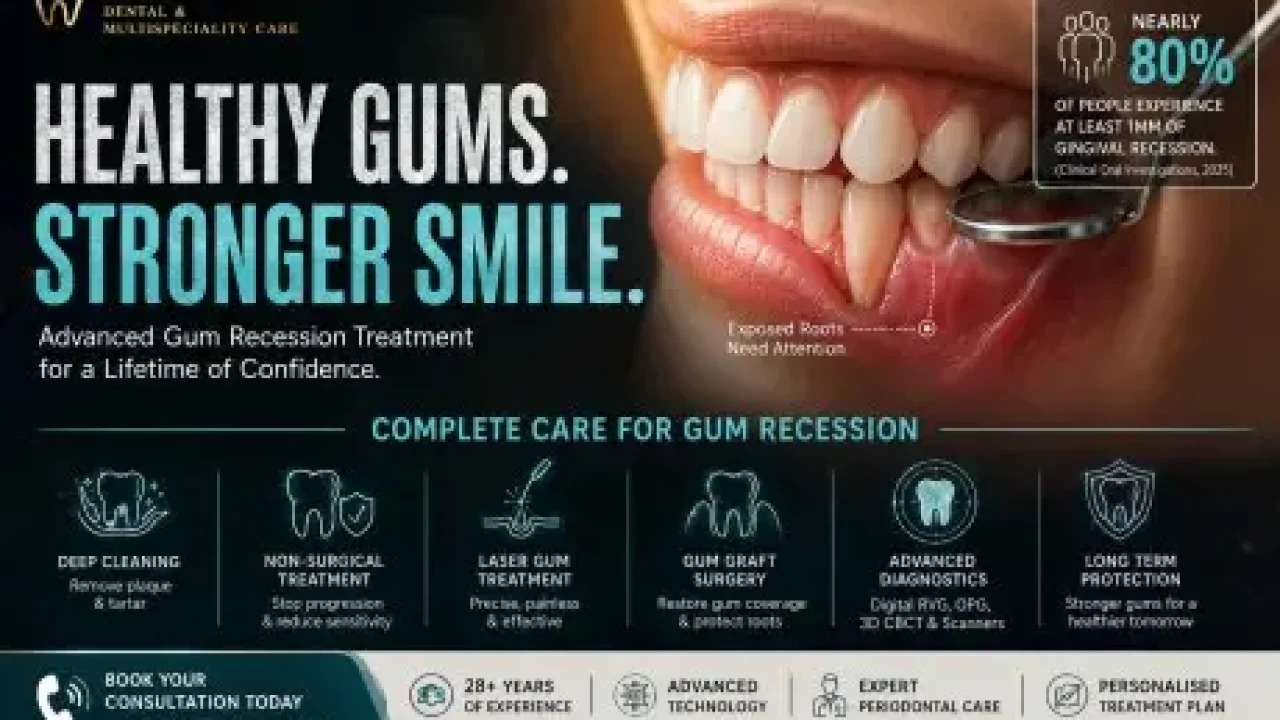
A 2025 review published in Clinical Oral Investigations estimated that nearly 80% of people experience at least 1 mm of gingival recession during their lifetime.
Why Do Gums Recede?
Several causes can contribute to gum recession:
- Aggressive brushing
- Gum disease
- Plaque and tartar buildup
- Smoking and tobacco use
- Teeth grinding
- Misaligned teeth
- Thin gum tissue
- Poor oral hygiene
- Bite-related trauma
Without proper gums treatment in Delhi, recession can continue progressing slowly over time.
When Does Gum Recession Need Treatment?
Treatment becomes important when:
- Sensitivity affects eating or drinking
- Roots become visible
- Gums bleed frequently
- Bad breath continues
- Teeth feel loose
- Recession keeps worsening
- Root decay develops
Early treatment is usually simpler and less invasive than advanced gum surgery later.
Non-Surgical Gum Recession Treatment in Delhi
Mild gum recession often responds well to non-surgical periodontal treatment.
Scaling and Root Planing
Deep cleaning removes plaque and tartar deposits below the gum line. Root surfaces are cleaned and smoothed to reduce bacterial buildup and inflammation.
This treatment helps patients with:
- Early gum disease
- Bleeding gums
- Bad breath
- Mild gum recession
Professional deep cleaning is often the first step before considering gum surgery.
Desensitising Treatment
Exposed roots can become extremely sensitive. Desensitising toothpastes, fluoride applications, or bonding agents help reduce discomfort from cold, hot, or sweet foods.
Brushing Technique Correction
Many cases of recession worsen because of hard brushing. Using a soft-bristled toothbrush and gentle brushing technique protects the gum margin from further damage.
Orthodontic Correction
In some cases, poorly aligned teeth place excessive pressure on gums. Orthodontic treatment may help reduce future recession risk by improving tooth position.
Gum Surgery for Advanced Gum Recession
When recession becomes moderate or severe, gum surgery may be necessary to restore gum coverage and protect the roots.
Connective Tissue Graft
Connective tissue grafting is considered one of the most effective gum recession treatments for long-term root coverage.
During the procedure:
- Tissue is usually taken from the palate
- The graft is placed over the exposed root
- Existing gum tissue is repositioned
This treatment improves:
- Root protection
- Gum thickness
- Smile appearance
- Sensitivity reduction
Patients looking for advanced gum surgery in Delhi often benefit from this procedure for predictable results.
Coronally Advanced Flap Surgery
A coronally advanced flap repositions existing gum tissue over the exposed root surface. It may be combined with connective tissue grafting for better stability and aesthetics.
This procedure is commonly recommended for:
- Single-tooth recession
- Cosmetic gum correction
- Moderate gum loss
Laser Gum Treatment
Dental lasers help reduce bacteria and inflammation while improving patient comfort during gum treatment.
Laser-assisted gum care may help with:
- Deep cleaning support
- Inflamed gum tissue
- Faster healing
- Reduced bleeding
However, laser treatment alone cannot replace grafting when actual tissue coverage is required.
Which Gum Recession Treatment Is Right for You?
The best treatment depends on:
- Severity of recession
- Number of affected teeth
- Gum thickness
- Bone support
- Presence of gum disease
- Root sensitivity
| Condition | Recommended Treatment |
|---|---|
| Mild recession with inflammation | Scaling and root planing |
| Sensitivity from exposed roots | Desensitising treatment |
| Recession from aggressive brushing | Brushing correction |
| Moderate recession | Gum graft surgery |
| Multiple recession defects | Advanced periodontal surgery |
| Recession with bone loss | Guided tissue regeneration planning |
A detailed gum evaluation helps determine the safest and most effective treatment approach.
How to Prevent Further Gum Recession
Protecting your gums after treatment is essential.
Follow These Steps:
- Use a soft-bristled toothbrush
- Brush gently along the gum line
- Floss daily
- Avoid smoking and tobacco
- Attend regular dental cleanings
- Treat teeth grinding if present
- Manage gum disease early
Routine dental checkups help monitor gum health before recession worsens.
Advanced Gum Treatment at Krisshnaa Dental & Multispeciality Care
At Krisshnaa Dental & Multispeciality Care, we provide comprehensive gum recession treatment in Delhi using advanced diagnostic and periodontal technologies.
Our gum care services include:
- Digital RVG imaging
- OPG X-rays
- Laser gum treatment
- Deep cleaning and periodontal therapy
- Gum graft surgery
- Smile and gum aesthetic correction
- Personalized treatment planning
If you are experiencing tooth sensitivity, bleeding gums, or visible root exposure, early treatment can help protect your teeth and avoid more extensive gum surgery later.
Call +91 7836983698 to book your gum consultation today.
Frequently Asked Questions
Can receding gums grow back naturally?
No. Lost gum tissue does not grow back naturally. Treatment helps stop progression and restore gum coverage using grafting or periodontal surgery when needed.
What is the best gum recession treatment in Delhi?
The best treatment depends on the severity and cause. Mild cases may improve with deep cleaning, while moderate to severe recession often requires gum graft surgery.
Is gum surgery painful?
Gum surgery is performed under local anaesthesia, so patients usually feel minimal discomfort during the procedure. Mild soreness after surgery is normal for a few days.
How long does gum recession surgery take to heal?
Initial healing usually takes 1 to 2 weeks. Complete tissue maturation may continue over several weeks.
What happens if gum recession is ignored?
Untreated recession can lead to:
- Increased tooth sensitivity
- Root decay
- Gum infection
- Bone loss
- Loose teeth
- Higher risk of tooth loss