Do you have several dental problems at the same time?
Maybe you have:
- Missing teeth
- Broken or severely damaged teeth
- Difficulty chewing
- Old crowns or bridges that keep failing
- Worn-down teeth
- Tooth pain or repeated infections
- A bite that no longer feels comfortable
- Concerns about your smile
If several problems are connected, treating only one tooth at a time may not always address the bigger picture.
At Krisshnaa Dental & Multispeciality Care, Central Delhi, full mouth restoration is planned by looking at your teeth, gums, bite, function and smile together.
Call +91 7836983698 or +91 7836983625 to book a consultation.
What Is Full Mouth Restoration?
Full mouth restoration, also called full mouth rehabilitation or full mouth reconstruction, is a personalised dental treatment approach used when multiple dental problems need attention.
It does not automatically mean removing all your teeth.
A patient may have:
- A few teeth that can be saved with root canal treatment
- Missing teeth that may need dental implants
- Broken teeth requiring crowns
- Gum problems affecting tooth support
- Worn teeth requiring bite rehabilitation
- Cosmetic concerns that can be addressed after oral health is stabilised
Every mouth is different.
That is why a proper full mouth treatment plan should begin with diagnosis, not with a fixed package.
Full Mouth Restoration vs Simply Replacing Teeth
This is an important difference.
Replacing a missing tooth alone may be helpful, but complex dental problems often involve more than the visible gap.
For example:
A missing tooth can affect neighbouring teeth.
Worn teeth can change the bite.
Gum disease can weaken the support around teeth.
A badly damaged tooth may still be treatable and worth saving.
Old restorations may affect chewing and bite balance.
A complete assessment helps determine:
What can be saved. What needs treatment. What needs replacement. And what should be done first.
Which Treatments Can Be Part of Full Mouth Restoration?
Depending on your dental condition, a full mouth rehabilitation plan may include one or several treatments.
1. Dental Implants for Missing Teeth
Dental implants can be considered for replacing missing teeth in suitable cases.
They may be used for:
- Single missing teeth
- Multiple missing teeth
- Implant-supported bridges
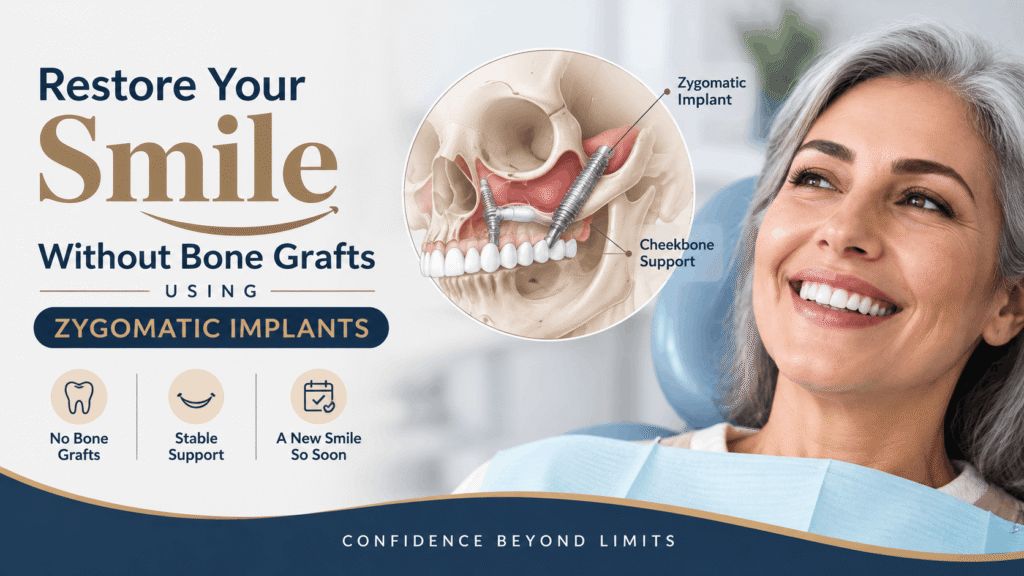
- Full arch rehabilitation
The right implant treatment depends on factors such as bone condition, gum health, bite and the number of missing teeth.
At Krisshnaa Dental & Multispeciality Care, treatment recommendations are based on your individual clinical requirements.
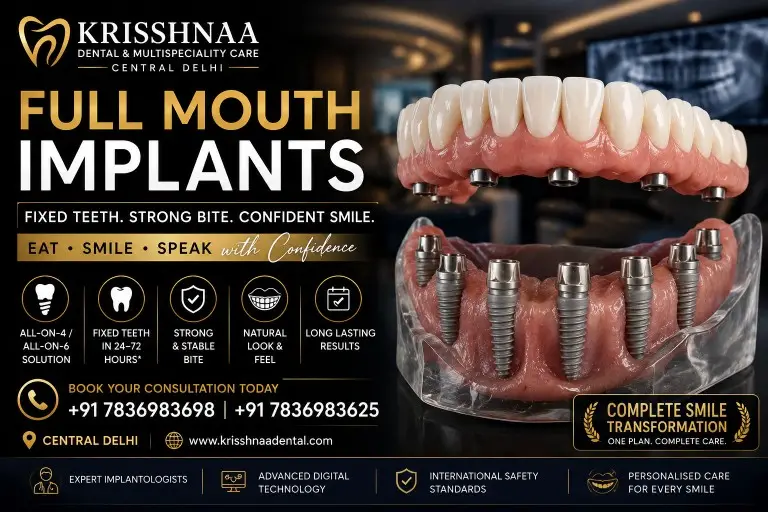
2. Full Mouth Dental Implants
Patients who have lost many or all of their teeth may be candidates for full mouth implant rehabilitation.
Depending on the case, options may include:
- Multiple individual implants
- Implant-supported bridges
- Full arch implant treatment
- All-on-4 dental implants
- All-on-6 dental implants
However, no responsible treatment plan should recommend the same number of implants to every patient.
Your bone, bite, existing teeth and final restoration all matter.
3. Root Canal Treatment to Save Natural Teeth
A severely damaged or infected tooth does not always need extraction.
When clinically appropriate, root canal treatment may help save the natural tooth.
The tooth may then require a suitable restoration such as a crown to restore strength and function.
Preserving a natural tooth, when possible and predictable, can be an important part of full mouth rehabilitation.
4. Dental Crowns and Bridges
Broken, weakened or heavily restored teeth may require crowns.
Dental bridges may also be used in selected situations to replace missing teeth.
The treatment choice depends on:
- Remaining tooth structure
- Condition of neighbouring teeth
- Gum health
- Bite forces
- Location of the missing tooth
- Overall treatment plan
A crown should not be planned in isolation when the patient’s bite and surrounding teeth are also affected.
5. Bite Correction and Functional Rehabilitation
Your teeth work as a system.
Every time you chew, your teeth meet and distribute forces.
When teeth are:
- Missing
- Worn down
- Broken
- Shifted
- Unevenly restored
the bite may also change.
In complex cases, restoring teeth without evaluating the bite can create further functional problems.
Full mouth rehabilitation may therefore include careful planning to improve comfort and chewing function.
6. Cosmetic Dentistry and Smile Improvement
Full mouth restoration is not only about appearance.
Oral health and function should come first.
Once the foundation is stable, cosmetic treatments may be included where appropriate.
Depending on the case, this may involve:
- Natural-looking crowns
- Veneers
- Tooth-coloured restorations
- Smile design
- Correction of tooth shape and colour
The goal is not simply to create a brighter smile.
A good rehabilitation plan aims to balance health, function and appearance.
How Is a Full Mouth Treatment Plan Created?
At Krisshnaa Dental & Multispeciality Care in Central Delhi, a comprehensive approach can help identify how different dental problems are connected.
Step 1: Understanding Your Main Concern
Patients often come with one immediate problem.
For example:
“My teeth keep breaking.”
“I cannot chew properly.”
“I have several missing teeth.”
“I want fixed teeth instead of dentures.”
“I am embarrassed about my smile.”
The first step is understanding what is affecting your daily life and what you want your treatment to achieve.
Step 2: Examining Teeth, Gums and Bite
A complete dental assessment looks beyond the tooth that is currently causing pain.
The dentist may evaluate:
- Existing teeth
- Missing teeth
- Gum health
- Tooth wear
- Old fillings and crowns
- Bite relationship
- Areas of infection or decay
This helps identify problems that may influence the success of future treatment.
Step 3: Dental Imaging and Diagnosis
Complex dental cases may require appropriate imaging for diagnosis and treatment planning.
Imaging can help assess areas that cannot be fully evaluated through visual examination alone.
This can be particularly important for:
- Dental implants
- Impacted teeth
- Bone assessment
- Root-related problems
- Complex restorative cases
Step 4: Deciding Which Teeth Can Be Saved
This is one of the most important stages.
A tooth that looks badly damaged is not automatically a tooth that must be removed.
Where clinically appropriate, the dentist may consider whether the tooth can be restored and maintained.
The goal is to preserve healthy natural tooth structure whenever possible.
Step 5: Planning Treatment in the Right Sequence
Complex dental treatment should not always be completed randomly.
For example:
- Active infection may need treatment first
- Gum problems may need to be controlled
- Teeth requiring root canal treatment may need restoration
- Missing teeth may need replacement after the foundation is stable
- Final crowns may be placed after functional planning
- Cosmetic improvements may be completed at the appropriate stage
The sequence matters because one treatment can influence another.
Step 6: Discussing Your Treatment Options
A patient should understand:
- What treatment is recommended
- Why it is being recommended
- Which teeth can potentially be saved
- What alternatives may be available
- How treatment may be staged
- What the expected maintenance requirements are
Good dental care should help patients make informed decisions.
Who May Need Full Mouth Restoration?
Full mouth rehabilitation may be considered when several dental problems are affecting oral health, function or appearance.
This can include:
- Multiple missing teeth
- Severely broken teeth
- Extensive tooth decay
- Heavily worn teeth
- Difficulty chewing
- Repeated failure of old crowns or bridges
- Multiple teeth requiring restoration
- Bite-related problems
- Long-term tooth loss
- Functional and cosmetic concerns occurring together
If you are experiencing several of these problems, a comprehensive dental evaluation may help identify the most suitable treatment approach.
Can Full Mouth Restoration Help With Chewing?
Yes, in suitable cases, restoring damaged and missing teeth may improve chewing ability.
However, successful treatment planning should consider more than simply filling gaps.
The dentist may need to evaluate:
- Bite balance
- Condition of the remaining teeth
- Gum support
- Bone condition
- Type of restoration
- Forces placed on the teeth during chewing
This is why complex rehabilitation should be planned as a complete system.
How Much Does Full Mouth Restoration Cost in Central Delhi?
There is no single fixed cost for full mouth restoration because every treatment plan is different.
The cost can depend on:
- Number of teeth requiring treatment
- Number of teeth that can be saved
- Number of missing teeth
- Type and number of dental implants
- Crown or bridge materials
- Root canal treatment requirements
- Gum treatment
- Bone grafting requirements
- Complexity of the bite
- Cosmetic procedures included
The most accurate estimate can be provided after a clinical examination and treatment plan.
At Krisshnaa Dental & Multispeciality Care, patients can discuss the treatment stages and available options before proceeding.
Why Choose a Comprehensive Approach Instead of Treating One Tooth at a Time?
Because dental problems can be connected.
A missing tooth can affect the bite.
A poor bite can contribute to tooth wear.
Tooth wear can affect chewing.
Gum problems can affect tooth stability.
Ignoring these relationships may mean treating symptoms without addressing the broader situation.
A full mouth assessment helps create a clearer treatment roadmap.
Frequently Asked Questions About Full Mouth Restoration
Is full mouth restoration the same as replacing all teeth?
No. Full mouth restoration does not automatically mean removing and replacing every tooth. The aim is to assess which teeth can be preserved, which need treatment and which may require replacement.
Can dental implants replace multiple missing teeth?
Yes. Dental implants may be used for single teeth, multiple missing teeth or full arch rehabilitation in suitable patients. The treatment depends on individual clinical factors.
How long does full mouth rehabilitation take?
The duration depends on the complexity of treatment. Some cases can be completed in fewer stages, while cases involving implants, healing periods, gum treatment or multiple restorations may take longer.
Is full mouth restoration painful?
Different procedures involve different levels of discomfort. Appropriate anaesthesia and careful treatment planning are used to improve patient comfort. Your dentist can explain what to expect for your specific treatment.
Can full mouth restoration improve my smile?
Yes. Once oral health and function are appropriately addressed, cosmetic dentistry may be included to improve tooth shape, colour and overall smile appearance.
Can broken teeth be saved instead of removed?
In some cases, yes. Depending on the damage, a tooth may potentially be treated using fillings, root canal treatment and crowns. A clinical examination is needed to determine whether the tooth is suitable for restoration.
Looking for Full Mouth Restoration in Central Delhi?
You do not have to treat every dental problem as an isolated issue.
If you have multiple missing teeth, broken teeth, difficulty chewing, worn teeth or repeated dental problems, a comprehensive assessment can help create a structured treatment plan.
At Krisshnaa Dental & Multispeciality Care, Central Delhi, we focus on understanding the condition of your teeth, gums, bite and overall oral health before recommending treatment.
Book a Consultation for Full Mouth Rehabilitation in Central Delhi
Krisshnaa Dental & Multispeciality Care
📍 Central Delhi
📞 Call +91 7836983698
📞 Call +91 7836983625
🌐 https://www.krisshnaadental.com
A personalised consultation can help you understand what can be saved, what may need replacement and which treatment options may be appropriate for your dental condition.